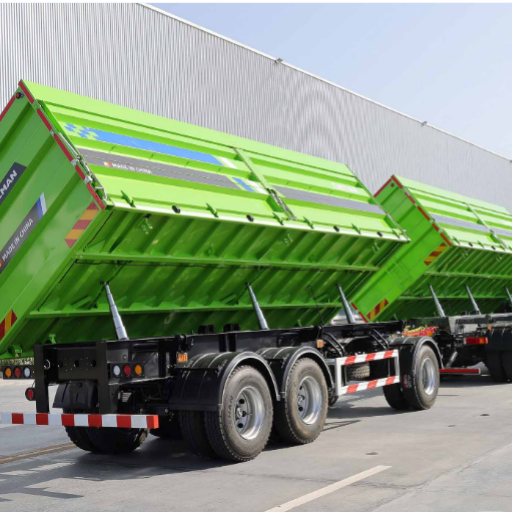
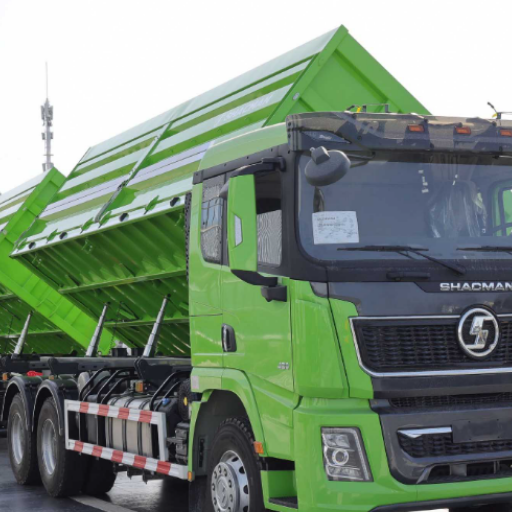
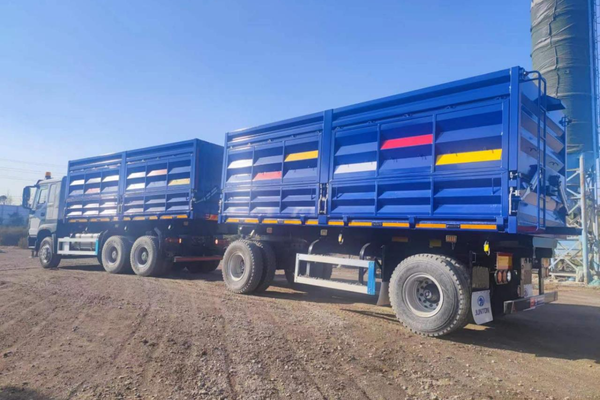
Full Trailer Truck

A 4×2 dump truck is a transport vehicle with four wheels (two axles), where the front axle is used for steering and the rear axle serves as the drive axle (with two driven wheels). This configuration is widely used in dump trucks designed for hauling and unloading loose materials such as sand, gravel, soil, or construction debris. Compared to more complex setups like 4×4 (four-wheel drive) or 6×4, the 4×2 dump truck is lighter, more cost-effective, and ideal for use on urban roads or relatively flat terrain.

Urban Agility
Its shorter wheelbase and tighter turning radius excel in navigating narrow city streets and jobsites.
Economic Advantage
Features a simpler design for a lower purchase price, reduced maintenance, and excellent fuel economy.
Efficient Payload
Offers a strong payload capacity paired with a lightweight design for optimal efficiency.
Proven Reliability
Its simple, time-tested design ensures better uptime, easier servicing, and reliable performance.

Typical Specifications of Full Trailer Truck

ParameterSpecification / Options
Vehicle TypeFull Trailer Truck
Axle Configuration6×4 (3 axles, 2 driven axles)
Intended UseOn-road heavy hauling, industrial freight transport
Overall LengthVaries by manufacturer and model
Overall WidthStandard road width limits (e.g., 2.6 meters)
Overall HeightVaries, often above 4 meters
Gross Combination Weight (GCW)Depending on regulations and setup (e.g., up to 64,000 kg)
Engine ConfigurationIn-line (typically 6-cylinder) Diesel
AspirationTurbocharged, often with intercooler
DisplacementVaries (e.g., 10L to 13L+)
Power OutputVaries widely (e.g., 300 HP to 500+ HP)
Torque OutputHigh torque at low RPM
Fuel SystemHigh-pressure Common Rail
TransmissionManual (multi-speed) or Automated Manual (AMT)
Drive Axle TypeDouble reduction or Hub reduction (common on 6×4)
Suspension (Front)Leaf springs, optional air suspension
Suspension (Rear)Air suspension, leaf springs, or mechanical bogie
Braking SystemAir brakes, ABS, EBS, optional Retarder (Engine/Hydrodynamic)
Cabin TypeDay cab, Sleeper cab (various sizes)
Seating CapacityTypically 1–2

Full Trailer Truck Advantages and Challenge

The Full Trailer Truck offers high payload , stability, and versatile cargo options with 300–500 HP, but faces challenges like limited maneuverability, higher maintenance, regulatory limits, initial costs, and increased fuel use.

  • High Payload Capacity: Supports 20,000–50,000 kg, ideal for transporting heavy industrial goods like steel or machinery, reducing trip frequency.
  • Enhanced Stability: Fixed trailer and 6×4 axle configuration with dual driven axles provide superior traction and balance on highways or uneven terrain.
  • Efficient Long-Haul Transport: 300–500 HP engines and aerodynamic design optimize fuel use over long distances, lowering costs.
  • Durable Construction: High-strength steel chassis and reinforced frame withstand harsh conditions, ensuring long-term reliability.
  • Versatile Cargo Options: Accommodates flatbeds, tankers, or dump trailers (20–40 m³), adapting to diverse freight needs.
  • Limited Maneuverability: Length up to 34.5 m and fixed trailer make tight turns or urban navigation difficult, requiring skilled drivers.
  • Higher Maintenance Costs: Multiple axles (4–8) and complex systems increase repair expenses and downtime for brakes or suspension.
  • Regulatory Restrictions: GVW (36,000–64,000 kg) and Euro 5–6 standards may limit routes or require costly upgrades in some regions.
  • Higher Initial Investment: Advanced engineering and large capacity lead to a significant upfront cost, impacting smaller operators.
  • Fuel Consumption: Powerful engines, while efficient, consume more fuel under heavy loads, raising operational expenses over time.
Full Trailer Truck

Versatile Applications of the full trailer truck

Industrial Hauling

Transports heavy machinery or steel beams (20,000–50,000 kg) to factories, leveraging its robust 6×4 design.

Construction Support

Delivers bulk materials like concrete or gravel to sites, with cargo capacities up to 40 m³.

Long-Distance Freight

Moves oversized loads like containers over highways, optimized by 300–500 HP engines.

Bulk Liquid Transport

Bulk Liquid Transport: Carries oil or chemicals in tankers, ensuring safe and efficient delivery with stable axle setup.

Why Choose Us as Your full trailer truck Supplier?

  • Unmatched Quality: We craft our Full Trailer Trucks with powerful 300–500 HP diesel engines, reinforced high-strength steel chassis, and durable axles, ensuring top-tier performance for loads up to 50,000 kg.

  • Competitive Pricing: We provide cost-effective pricing tailored to your budget and hauling needs, offering flexible financing and value-packed options for industrial or long-haul transport.

  • Expert Support: We offer 24/7 after-sales service, including prompt maintenance, genuine spare parts, and technical assistance, ensuring minimal downtime.

  • Custom Solutions: We design customizable trailers (20–40 m³) with flatbed, tanker, or dump options, plus day or sleeper cabs, tailored to your specific operational demands and cargo types.

Ready To Find Your Perfect Full Trailer Truck?

Discover a diverse range of Full Trailer Trucks crafted for your specific needs! We provide options in various sizes, 20,000–50,000 kg payload capacities, and configurations—ideal for industrial hauling, construction, or long-haul freight. We’re here to guide you in selecting the perfect truck for peak efficiency and durability. Contact us today at 06:10 PM JST, June 20, 2025, to explore our extensive lineup and receive personalized recommendations—start hauling your success now!

Get in Touch

Insights & News About Truck

Frequently Asked Questions

If you have any questions, please contact us for more information

Q: What is the payload capacity of a Full Trailer Truck?

A: Ranges from 20,000 to 50,000 kg, depending on the configuration.

Q: What type of engine powers a Full Trailer Truck?

A: Turbocharged diesel engines, typically 300–500 HP.

Q: What are common applications for a Full Trailer Truck?

A: Used for industrial hauling, construction support, long-distance freight, and bulk liquid transport.

Q: What is the typical gross vehicle weight (GVW)?

A: Ranges from 36,000 to 64,000 kg, based on axle setup

Q: What is the wheelbase range of a Full Trailer Truck?

A: Approximately 6–10 meters, varying by tractor and trailer length.

Q: Which brands manufacture common engines for this truck?

A: Popular brands include Volvo, Scania, and MAN.

Q: What emission standards does it meet?

A: Complies with Euro 5 to Euro 6 standards, depending on the model.

Q: What type of transmission is used?

A: Manual or automated, typically with 12–16 gears

Scroll to Top
Get in touch with us
Leave a message
Contact Form Demo